Zoning for a Townhouse
A townhouse usually needs residential zoning (R). The exact district names and rules come from your city or county zoning code, so always check the property's zoning before you buy or sign a lease.
New to zoning types? Read what residential zoning means and what it allows.
What zoning does a townhouse need?
R - Residential
What Zoning Do You Need for a Townhouse?
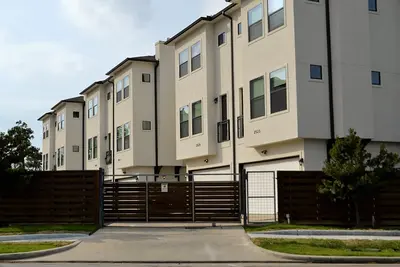
A townhouse is a multi-story residential dwelling that shares one or two walls with adjacent units but has its own entrance, typically at ground level. Townhouses require R (Residential) zoning, usually in medium-density residential zones (R-2, R-3, or specific townhouse classifications) that permit attached single-family dwellings. Single-family exclusive zones (R-1) typically do not permit townhouses because each unit shares walls with its neighbors.
Townhouse Zoning Classifications
Townhouses sit between single-family homes and apartment buildings in the density spectrum. They are denser than detached homes but maintain individual unit entrances, private outdoor space, and a sense of ownership that apartment buildings do not provide. Zoning for townhouses addresses lot width per unit (each townhouse unit has a narrow, deep lot), common wall construction standards, front, rear, and end-unit side setback requirements, building length limits (how many attached units can be in a single row before a break is required), parking requirements (typically two spaces per unit, often in an attached garage), and open space or common area requirements for the development.
Townhouse Development Patterns
Townhouses are developed in several patterns, each with different zoning implications. Fee-simple townhouses are on individual lots that the homeowner owns, with common areas maintained by an HOA. Condominium townhouses are legally structured as condominiums where the homeowner owns the interior of the unit and shares ownership of common elements. Rental townhouses are developed by a single owner as a rental property. The fee-simple pattern is the most straightforward from a zoning perspective because each unit sits on its own legally defined lot.
Recent Zoning Reform
Several states and cities have passed legislation allowing townhouses and other "missing middle" housing types in zones that previously permitted only single-family homes. Oregon, California, Minnesota, and other states have enacted laws that require cities to allow duplexes, triplexes, fourplexes, and in some cases townhouses in residential zones that previously restricted development to detached single-family homes. These reforms reflect a recognition that exclusively single-family zoning contributes to housing shortages and affordability problems.
If your state or city has passed missing middle housing legislation, townhouse development may be permitted on lots that the local zoning code appears to restrict to single-family use. Research current state legislation, as these laws are being updated frequently.
Steps Before Building Townhouses
Start by confirming the zoning on your target property. You can look up your property's zoning on ZoningPoint.com to identify the current classification. Contact your local planning department to verify that townhouse development is permitted, review the applicable dimensional and density standards, and determine whether any state legislation overrides local single-family restrictions. For larger townhouse developments, expect site plan review that addresses traffic, parking, stormwater, and compatibility with surrounding uses.
It is important that you look up the specific zoning type for your parcel of land, because every jurisdiction has their own unique zoning and this is just a generalization.
Townhouse Zoning FAQ
What zoning does a townhouse need?
A townhouse usually needs residential zoning (R). The exact district names and rules come from your city or county zoning code.
Is a townhouse commercial or residential?
A townhouse is usually treated as a residential use, so it is typically allowed in residential zones.
Can you have a townhouse in a residential area?
Usually, yes. A townhouse is a residential use, but the zone still sets lot size, height, parking and how many units you can have.
How do I check if a property is zoned for a townhouse?
Find the property on your city or county zoning map to get its zoning district, then look up that district in the zoning code to see whether townhouse is permitted, conditional or not allowed. The local planning department can confirm it. You can search for your city's zoning map on ZoningPoint, or read how to find a property on a zoning map.