Zoning for a Gas Station
A gas station usually needs commercial zoning (C). The exact district names and rules come from your city or county zoning code, so always check the property's zoning before you buy or sign a lease.
New to zoning types? Read what commercial zoning means and what it allows.
What zoning does a gas station need?
C - Commercial
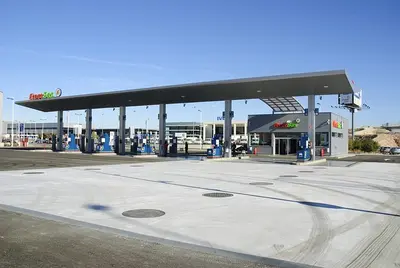
What Zoning Do You Need for a Gas Station?
A gas station is a retail fuel dispensing facility that may also include a convenience store, car wash, or vehicle service area. Gas stations require C (Commercial) zoning, and they are typically restricted to specific commercial sub-classifications such as highway commercial, auto-oriented commercial, or general commercial zones. Neighborhood commercial zones often prohibit gas stations due to the traffic, environmental, and aesthetic impacts associated with fuel storage and dispensing.
Highway and Auto-Oriented Commercial Zones
Gas stations are most commonly permitted in highway commercial and auto-oriented commercial zones. These zones are designed for businesses that depend on vehicle traffic and high visibility from major roads. The zoning provisions in these districts accommodate the wide curb cuts, multiple driveways, canopy structures, and illuminated signage that gas stations require.
Site plan requirements for gas stations in these zones typically include minimum lot size and frontage on a major road, driveway placement and spacing requirements to maintain traffic flow, canopy height and setback regulations, signage standards including fuel price signs, underground storage tank placement and monitoring requirements, and landscaping or screening along property lines adjacent to non-commercial uses.
Environmental Regulations
Gas stations are among the most heavily regulated commercial land uses due to the environmental risks of underground fuel storage. Environmental regulations that apply regardless of zoning classification include underground storage tank (UST) installation, monitoring, and leak detection requirements, spill prevention and countermeasure plans, groundwater monitoring wells around tank locations, vapor recovery systems on fuel dispensing equipment, and Phase I and Phase II environmental site assessments for new construction or property transfer.
These environmental requirements are administered by state environmental agencies (such as the state DEQ or EPA equivalent) rather than local zoning departments, but they significantly affect site development costs and timelines. Environmental compliance for a new gas station can take months and cost hundreds of thousands of dollars before construction begins.
Setback and Buffer Requirements
Many jurisdictions impose special setback requirements for gas stations, particularly for the underground storage tanks and fuel dispensing areas. Minimum distances from wells, water bodies, wetlands, residences, schools, and other sensitive uses are common. These setbacks can significantly reduce the buildable area on a lot and may make smaller parcels infeasible for gas station development.
Buffer and screening requirements between gas stations and adjacent residential or institutional properties are also common and may include solid fencing or walls, landscaping buffers, and restrictions on lighting intensity and hours of canopy illumination.
Convenience Stores and Additional Services
Most modern gas stations include a convenience store, and many add car washes, quick-service restaurants, or vehicle service bays. Each additional use may have its own zoning requirements. A car wash may need a separate conditional use permit. A restaurant component requires health department food service permitting. Service bays introduce hazardous waste handling requirements for used oil, coolant, and other fluids. Verify that each component of your proposed operation is permitted under the applicable zoning rather than assuming that gas station approval covers all ancillary uses.
Steps Before Opening a Gas Station
Start by confirming the zoning on your target property. You can look up your property's zoning on ZoningPoint.com to identify the current classification. Gas station development involves parallel tracks with multiple agencies: local planning for zoning and site plan approval, the state environmental agency for underground storage tank permits, the fire marshal for fuel handling and storage safety, and the health department if food service is included. Engage with all of these agencies early, as the environmental and fire safety permitting timelines often exceed the local zoning approval timeline.
It is important that you look up the specific zoning type for your parcel of land, because every jurisdiction has their own unique zoning and this is just a generalization.
Gas Station Zoning FAQ
What zoning does a gas station need?
A gas station usually needs commercial zoning (C). The exact district names and rules come from your city or county zoning code.
Is a gas station commercial or residential?
A gas station is usually treated as a commercial use, so it typically belongs in a commercial zone rather than a residential one.
Can you have a gas station in a residential area?
Usually not by right. Most codes only allow a gas station in commercial zones. In a residential zone you would typically need a conditional use permit, a variance or a rezoning, and some cities do not allow it at all.
How do I check if a property is zoned for a gas station?
Find the property on your city or county zoning map to get its zoning district, then look up that district in the zoning code to see whether gas station is permitted, conditional or not allowed. The local planning department can confirm it. You can search for your city's zoning map on ZoningPoint, or read how to find a property on a zoning map.