Zoning for an RV Storage Facility
Probable Zoning Classification: C - Commercial or I - Industrial
What Zoning Do You Need for an RV Storage Facility?
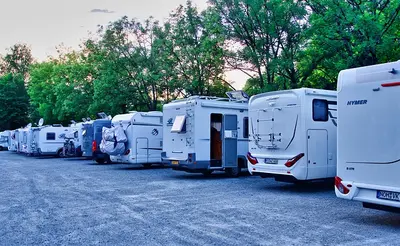
An RV storage facility is a commercial property where customers rent outdoor lots, covered spaces, or enclosed units to store recreational vehicles when they are not in use. RV storage facilities require C (Commercial) or I (Industrial) zoning, with the same regulatory framework that applies to boat and RV storage facilities. Light industrial zones are particularly well-suited because they accommodate the large lot sizes, wide drive aisles, and outdoor vehicle storage that this use requires.
Why Industrial Zoning Works Best
RV storage facilities need flat, accessible parcels with wide internal roads that can accommodate vehicles up to 45 feet long. Industrial zones provide this type of land at lower cost than commercial zones, with fewer aesthetic restrictions and greater tolerance for outdoor vehicle storage. Light industrial zoning permits outdoor storage as a primary or conditional use and imposes manageable screening and surface requirements.
The main zoning requirements for RV storage in industrial zones are screening (solid fencing or walls to block views of stored RVs from public roads), surface standards (paved or stabilized gravel), security lighting with limits on light spillover, access point design for large vehicles, and stormwater management for the large surface area.
Commercial Zoning Considerations
Some RV storage facilities operate in commercial zones, particularly in suburban areas where industrial land is scarce. Commercial zoning may impose additional aesthetic and screening requirements beyond what industrial zones require, as commercial districts maintain higher appearance standards. Facilities in commercial zones may need enhanced landscaping buffers, decorative fencing rather than chain-link, and building design standards for any on-site office or management structures.
Covered and Indoor Storage
Covered RV storage (canopy structures over individual bays) and fully enclosed RV storage buildings represent a premium tier of RV storage that commands higher rental rates. These facilities require building permits for the structures and must comply with commercial building codes for fire separation, structural wind and snow loads, and fire suppression. Fully enclosed RV storage buildings are increasingly popular because they provide maximum protection for expensive vehicles and face less community opposition than open-air lots.
Steps Before Opening an RV Storage Facility
Start by confirming the zoning on your target property. You can look up your property's zoning on ZoningPoint.com to identify the current classification. Contact your local planning department to verify that outdoor vehicle storage is permitted in the zone, what screening and surface requirements apply, and whether a conditional use permit or site plan review is required. For covered or enclosed storage, obtain building permits and verify compliance with fire and structural codes.
It is important that you look up the specific zoning type for your parcel of land, because every jurisdiction has their own unique zoning and this is just a generalization.
Other Zoning Uses
- ADU
- Affordable Housing Property
- Agriculture Property
- Airbnb
- Animal Rescue
- Assisted Living Facility
- Auto Repair Shop
- Bakery
- Banquet Hall
- Barbershop
- Barndominium
- Bed and Breakfast
- Boat and RV Storage Facility
- Brewery
- Business
- Campground
- Car Dealership
- Cemetery
- Childcare Facility
- Church
- Coffee Shop
- Commercial Kitchen
- Container Home
- Data Center
- Daycare Center
- Dental Office
- Distillery
- Dog Boarding Facility
- Dog Daycare
- Duplex
- Elementary School
- EV Charging Station
- Event Space
- Food Truck Park
- Gas Station
- Glamping Destination
- Greenhouse
- Group Home
- Guest House
- Gun Range
- Gym
- Halfway House
- High School
- Home Business
- Homeless Shelter
- Hookah Lounge
- Hotel
- House
- Indoor Playground
- Industrial Property
- Kindergarten
- Light Industrial Property
- Manufactured Home
- Mechanic Shop
- Medical Practice
- Middle School
- Mobile Home
- Mobile Home Park
- Multi-family Property
- Multiple Houses
- Office Space
- Outdoor Storage
- Park
- Parking Lot
- Primary School
- Private School
- Public School
- Recording Studio
- Residential Property
- Restaurant
- RV Park
- School
- Senior Housing Facility
- Shipping Container House
- Short Term Rental
- Single Family Home
- Small Business
- Sports Complex
- Storage Unit Facility
- Storage Units
- Tattoo Shop
- Tiny Home Community
- Townhouse
- Trailer Park
- Transitional Housing Building
- Triplex
- Used Car Dealer
- Veterinary Clinic
- Warehouse
- Wedding Venue
